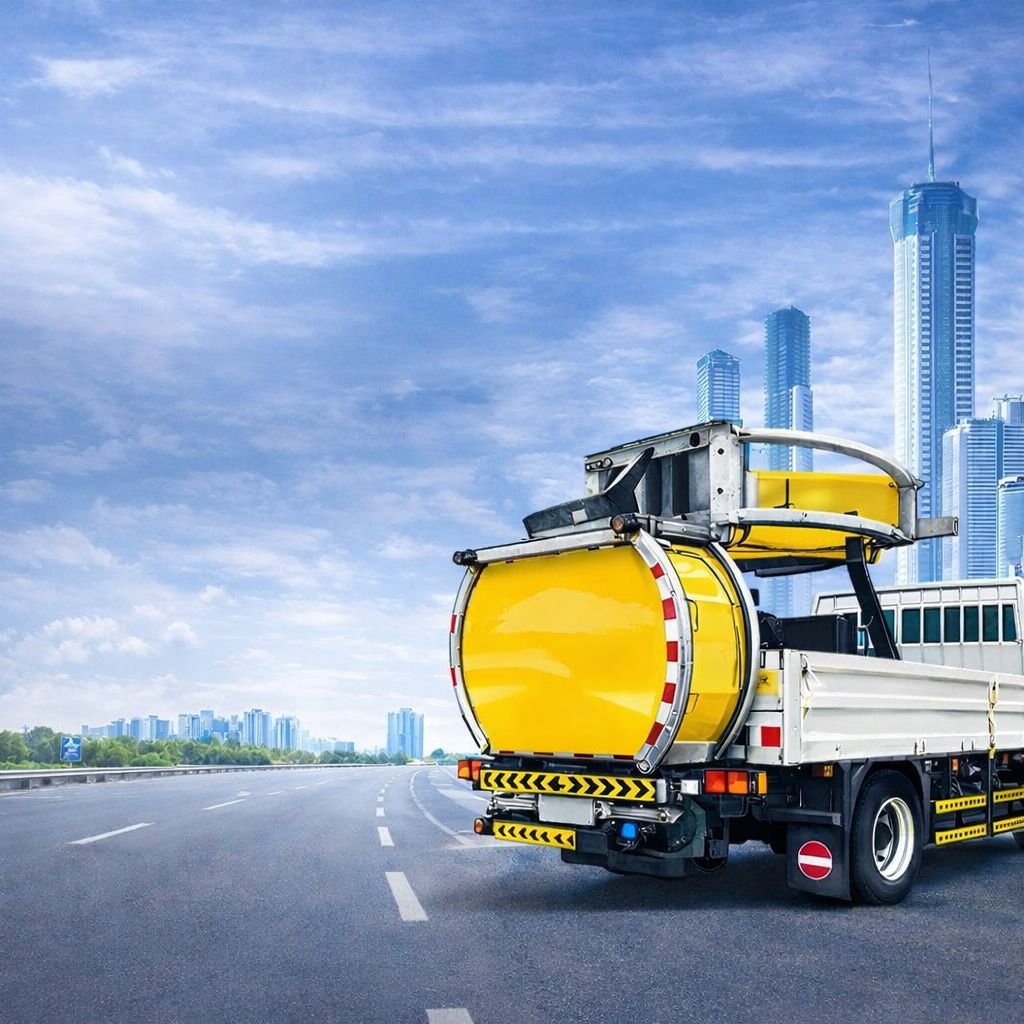
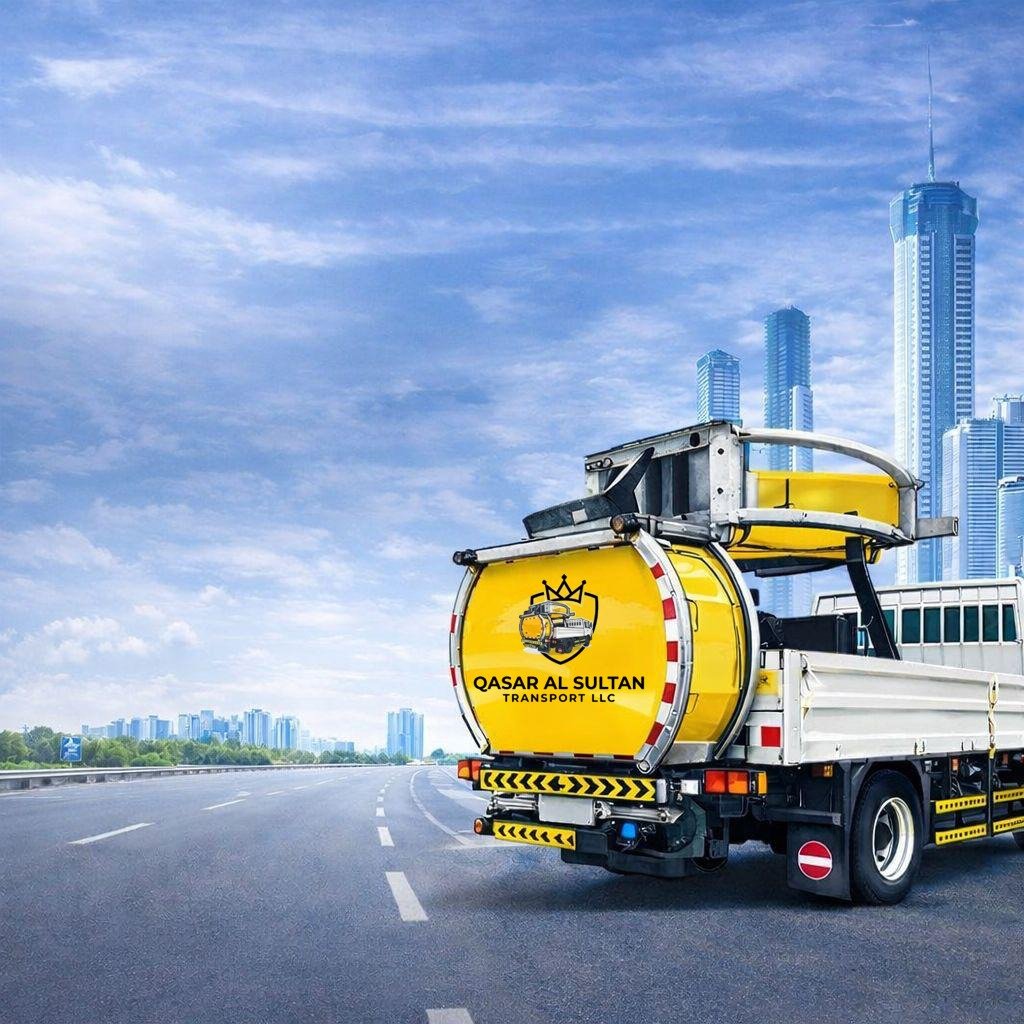
Daily in the UAE thousands of road workers work within metres of fast-moving traffic. Lane closures and live-traffic work zones are the norm for Abu Dhabi’s Sheikh Zayed Road, Emirates Road, the Abu Dhabi-Dubai Expressway and hundreds of arterial roads in all seven emirates. The TMA crash cushion is placed between workers and the potential for a rear-end collision in all of those work zones.
The energy absorbing impact system mounted on the back of a shadow vehicle is called a TMA crash cushion, or sometimes just a truck mounted attenuator crash cushion. The device that a striking vehicle actually makes contact with. The crash cushion is designed to be deformed in a controlled and predictable manner when hit by a fast-moving vehicle to absorb the kinetic energy of impact and safely stop the offending vehicle while preserving the safety of the work crew in front.
If the UAE contractors do not own or have their own TMA fleet, the compliant, flexible and cost-effective solution is crash cushion rental. This guide helps you understand what TMA crash cushions are, how they function, what UAE regulations require and how to choose the right rental company for your project.
In the UAE construction and road works market, the terms “TMA” and “crash cushion” can be used interchangeably. To be precise:
TMA crash cushion rental refers to the entire shadow vehicle package which includes a truck, crash cushion unit, arrow board, beacon lighting, operator and compliance documentation for deployment on a live-traffic work zone.
Every TMA crash cushion tends to have a number of energy absorbing cartridges, usually aluminium honeycomb or engineered steel tube assemblies at its centre. The sole job of these cartridges is to be destroyed in a controlled manner.
If the rear of a shadow truck collides with the rear of another vehicle, the crash cushion cartridges absorb the impact progressively, starting from the point of impact and moving towards the host vehicle. The progressive buckling is a mechanism that converts kinetic energy of the collision into the deformation energy, just like modern car crumple zones. This creates a dramatic reduction of peak deceleration forces on occupants of both the striking vehicle and the host truck, and importantly, the shadow vehicle is not driven forward by the striking vehicle into the road workers in front of the truck.
Crash cushion cartridges should be inspected and replaced after any impact event until they can be returned to service. A cushion that has taken a blow is an energy-absorbed safety device, and will not work to protect the driver again unless the energy absorption elements are replaced.
Dubai Road & Transport Authority (RTA) Work Zone Requirements
The Roads and Transport Authority (RTA) in Dubai requires the use of a MASH TL-3 certified TMA crash cushion in all activities in or near live traffic lanes on a roadway greater than or equal to 80 km/h. The crash cushion unit shall comply with certain RTA configuration requirements such as:
A Certified Crash Cushion truck must be in place and ready prior to the time the work permit window is open. For projects that are not running with a compliant TMA crash cushion, the permit is suspended as soon as it is discovered, the project is shut down and financial penalties will be imposed.
The Integrated Transport Centre (ITC) in Abu Dhabi, working alongside Abu Dhabi Police, are implementing the same rules for live-traffic road closures on the expressway and arterial network in Abu Dhabi. TMA crash cushion units used on Abu Dhabi roads need to meet specific requirements, including:
Sharjah and Northern Emirates
In Sharjah, Ajman, Ras Al Khaimah, Fujairah and Umm Al Quwain, the road authorities require the correct level of impact protection for live-traffic works. Specifications and application of permits are different in each emirate and depending on the specific road type. Crashed cushions must be confirmed with relevant authorities in each of the Emirates by contractors who work in more than one.